The First peoples of Steveston
Centuries before European settlers made contact and considered Canada as a nation, Indigenous people inhabited this land. Various cultures used the land of Steveston for hunting, harvesting, and flourishing. The Musqueam people are considered the most notable, but other nations such as the Stó:1õ, Kwantlen, Cowichan, and Tsawwassen inhabited Steveston.
Connection to Place
The Musqueam people have been present in their traditional territory for over 9,000 years. The name “Musqueam” is derived from the Hunquminum word xwməθkwəy̓əm, which means “place of the river grass” or “place where the river grass grows.” The River Grass refers to the musquay plant (məθkwəy̓), which plays a central role in the cultural identity of the Musqueam people. The musquay plant was thought to be the “new life” that emerged rom the creation of the Fraser River. According to a muquay origin story, a large double-headed serpent (sʔi:ɬqəy̓) lived in Camosun Bog (xwməm̓qwe:m). As the serpent moved, it created the Fraser River. From the serpent’s droppings, new life emerged in the form of river grass (məθkwəy̓). The musquay plant is now extinct and no longer inhabits Steveston.
The Musqueam people are thought to be the “stewards of the lands, waters, and living creatures” within their territory. The Musqueam people have a profound connection to the land they occupy. They believe they must return and care for the land and resources that are provided to them. Just as the land has provided for them, they must provide and care for the land in return. Common practices like oral thanks and offerings were used to express appreciation towards Mother Nature. Musqueam people believe that nature is their kin as their first ancestors were said to have descended from the sky, then were transformed into forms such as rocks, animals, and humans.
ʷeyaʔχʷ (Garry Point)
The cultural significance of Garry Point Park must be acknowledged to properly represent the First Peoples of Steveston. Garry Point was a summer campsite for the Musqueam people and other local nations. During the summer many nations such as the Snuneymuxw, who resided mostly on Vancouver Island, would travel to the Garry Point campsite to partake in marriages and other festivities. The summer was a very busy time at ʷeyaʔχʷ (Garry Point.) These marriages and summer camps would act as a way to create connections between the Hul’qumi’num speaking groups.
The stal̕əw̓ (Fraser River)
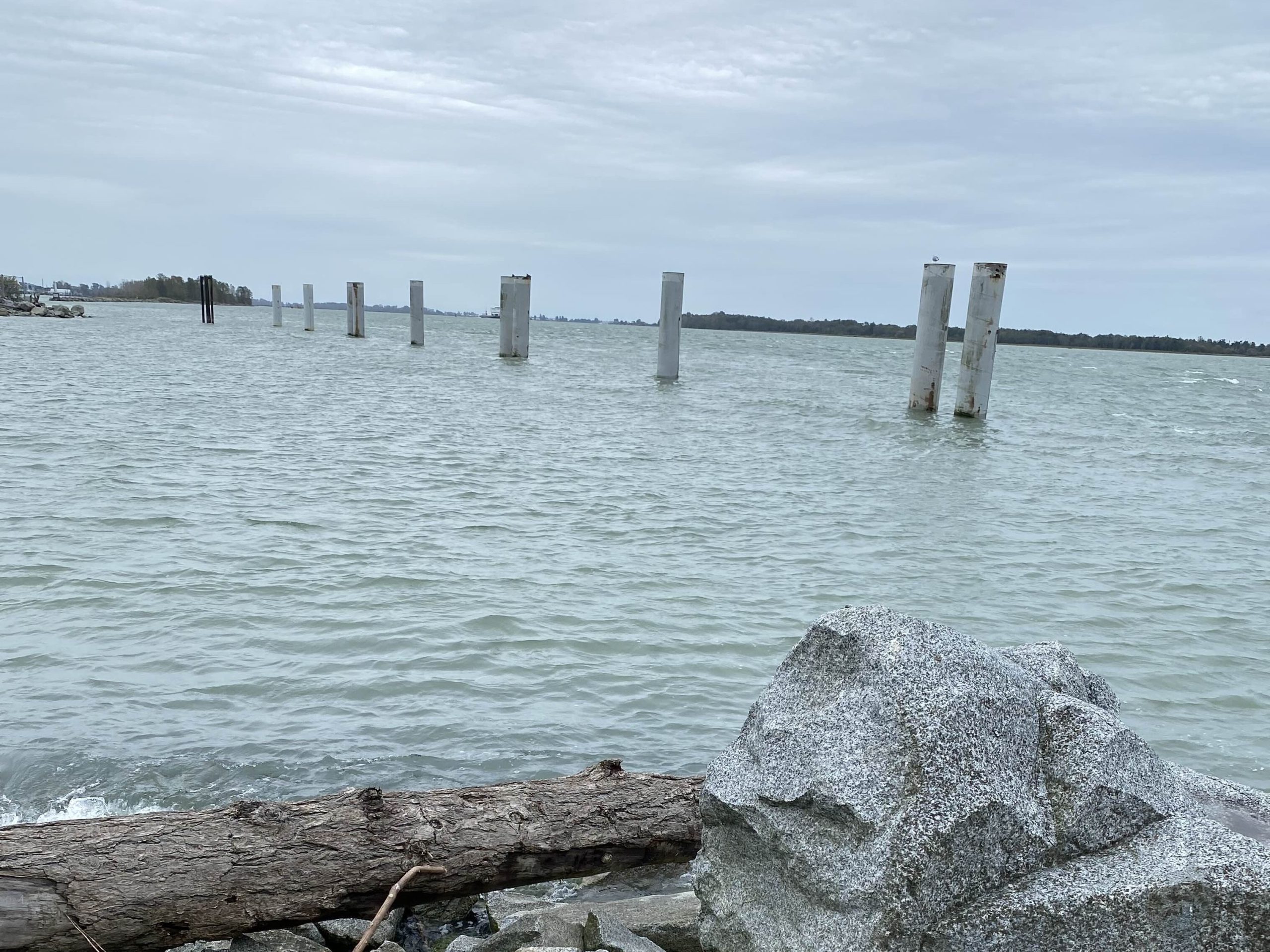
The Musqueam people are fishing people that rely on the Fraser River. Not only do the Musqueam people rely on the Fraser for resources such as food, the Musqueam people are also connected to the river through their rhythms, stories, and culture. The Fraser River is interconnected with Musqueam culture because the survival of the Musqueam people depended on the Fraser.
The Stal̕əw̓ (Fraser) was the largest food source for the Musqueam people because of various wildlife like Salmon, bull kelp, and other fish. The Stal̕əw̓ also provided transportation to the Musqueam people. Musqueam would use the Stal̕əw̓ to travel upriver and transport resources such as cedar logs. One of the reasons why there are many logs found on the beaches of Steveston is because of the Musqueam. The excess logs would eventually wind up on our beaches.

Land acknowledgment
The land that we live on is the unceded traditional land of the hən̓q̓əmin̓əm̓(?) language and the Hul’qumi’num treaty group. Which include the Musqueam, Stó:1õ, and Kwantlen nations. The Musqueam, Stó:1õ, and Kwantlen have used this land to live, grow, and flourish for millennia before Canada was formally acknowledged. Without the colonization initiated by many European settlers, the first peoples would not have suffered from residential schools, language extinction, and ultimately genocide. Canadians must acknowledge the unceded territory and honor the first nations in our education, culture, and society to reach reconciliation.
Hən̓q̓əmin̓əm̓
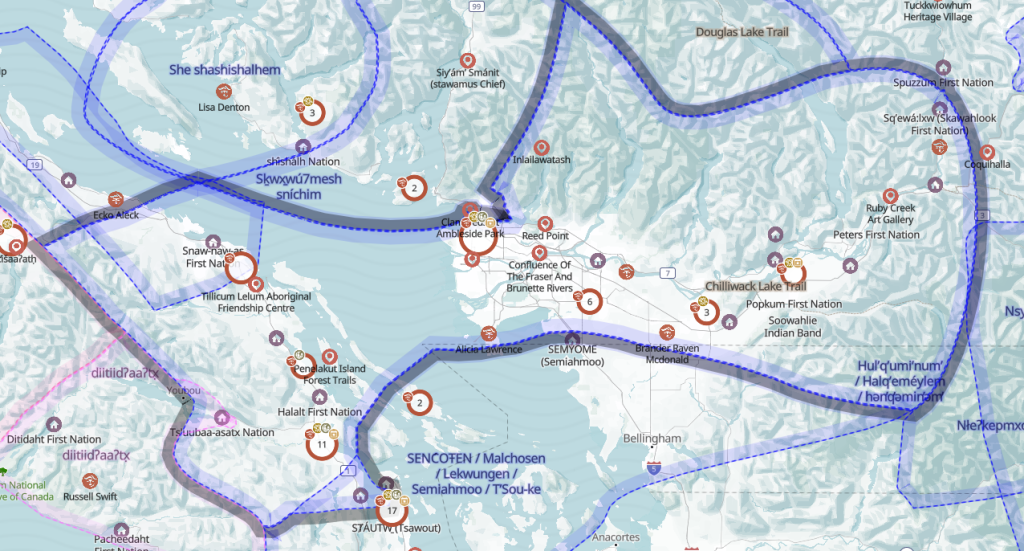
Hən̓q̓əmin̓əm̓ is the language that is spoken locally in Steveston by the First Nations. Hən̓q̓əmin̓əm̓ is a dialect of the Halkomelem language which is spoken throughout Vancouver and the Fraser river areas. Halkomelem has three distinct dialects, Hən̓q̓əmin̓əm̓, Hul’q’umi’num’, and Halq’eméylem. Halq’eméylem is more commonly spoken upriver the Stal̕əw̓ (Fraser) and Hul’q’umi’num’ is spoken on Vancouver Island. Hul’q’umi’num’ can be further divided into three Island subdialects: Nanaimo, Chemainus, and Cowichan.
Halkomelem has approximately 105 fluent speakers with 512 “semi” speakers. Hən̓q̓əmin̓əm̓ is being taught in courses at local universities such as UBC. Some common Hən̓q̓əmin̓əm̓ words that you can learn today are ʔəm̓i ce:p (Welcome) and hay čxʷ q̓ə (Thank-you individual.) Listen to the Hən̓q̓əmin̓əm̓ pronounciation below.